The days of manually copying files to a server via FTP or executing unrecorded terminal commands in production are long gone. In modern engineering, infrastructure is software. If an environment cannot be torn down and rebuilt identically from declarative scripts within minutes, it is not production-ready.
Our Cloud & Infrastructure practice focuses on stability, automation, and deterministic release cycles.
The Pillars of Cloud Engineering Discipline
1. Standardized Multi-Stage Containerization
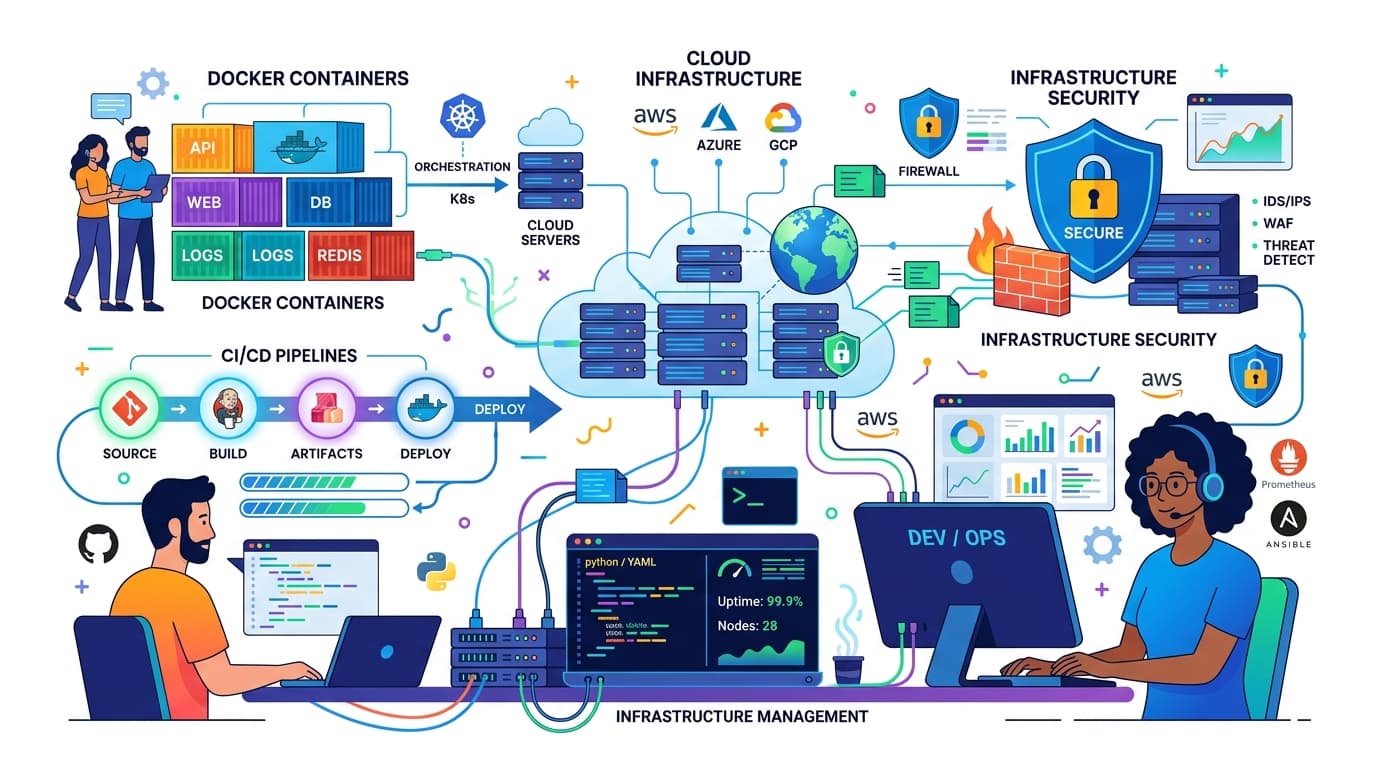
We containerize services using Docker multi-stage builds. Development dependencies, linters, and compilers are stripped from final runtime images, drastically reducing attack surfaces and container footprints. The resulting lightweight image runs identically on an engineer's laptop, a staging server, and a production Kubernetes cluster.
2. Automated CI/CD Verification Gates
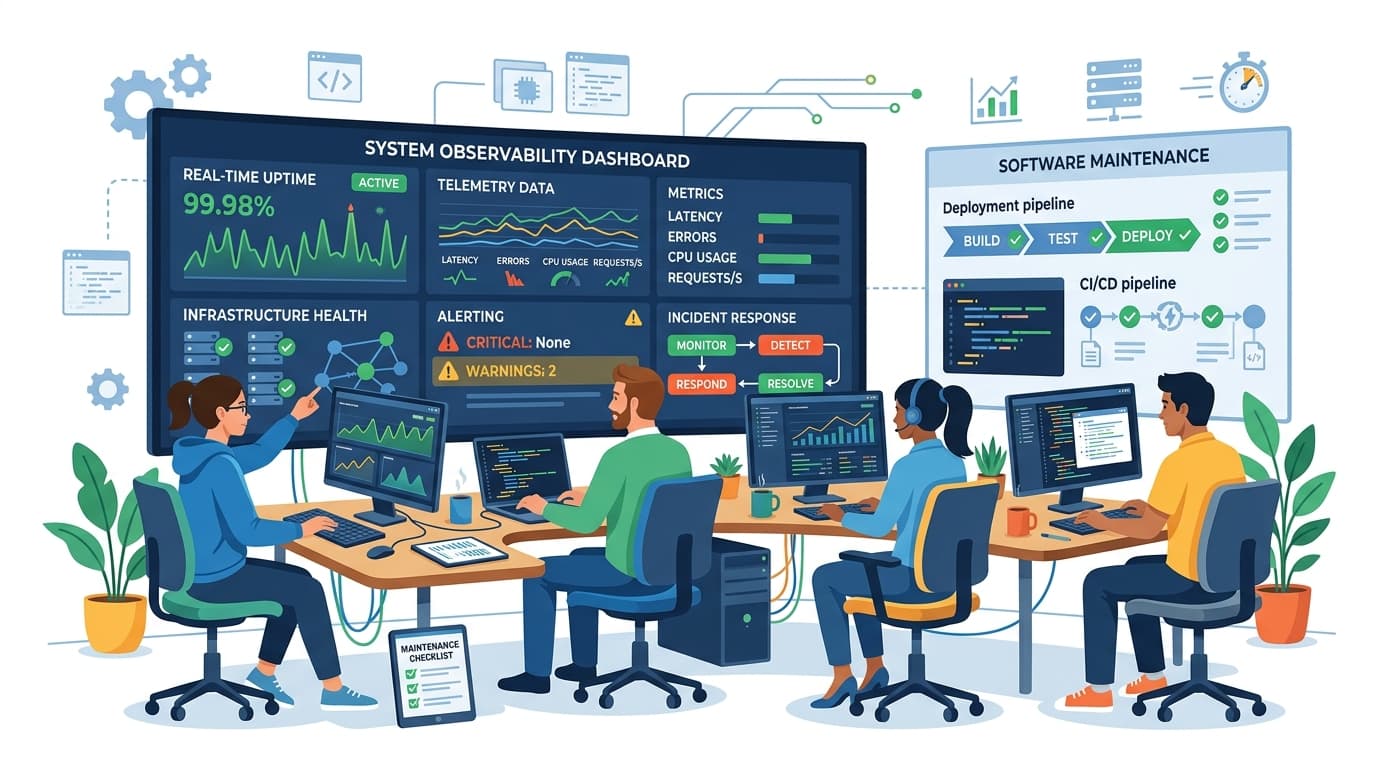
No code reaches production without surviving an automated gauntlet. Every pull request triggers a continuous integration pipeline that runs static type checking, unit and integration suites, security dependency audits, and linting standards. Builds that fail any gate are rejected automatically, safeguarding production stability.
3. Zero-Downtime Deployment Strategies
Deploying new code should never require taking systems offline. Through rolling container updates, health check probes, and reverse proxy connection draining, newly spawned instances must pass health checks before receiving production traffic. If an error is detected post-deployment, automated rollbacks revert to the previous verified build in seconds.
4. Infrastructure Security & TLS Hardening
From automated Let's Encrypt TLS renewal and strict Content Security Policies (CSP) to rate-limiting and DDoS mitigation, security is built into the network topology. Secrets are injected via encrypted environment stores rather than checked into repositories, ensuring complete compliance with international data standards.